
What Is Mercedes-Benz Digital Light?
- Precision lighting uses 2.6 million pixels to illuminate roads without blinding oncoming traffic.
- HD technology projects navigation arrows and safety warnings directly onto the Hoffman Estates pavement.
- Adaptive sensors adjust beam patterns 100 times per second for curves and poor weather.
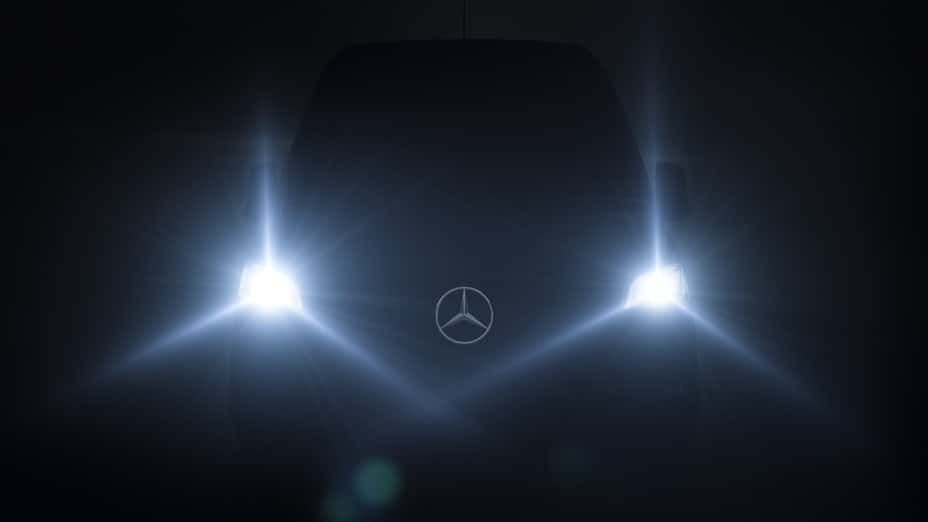
Mercedes-Benz Digital Light represents a leap beyond traditional LED headlights, transforming how drivers experience nighttime visibility. This advanced lighting technology doesn’t just illuminate the road ahead, it actively communicates with drivers through high-definition projections and adapts in real time to changing conditions.
For drivers navigating Hoffman Estates’ mix of well-lit commercial corridors and darker residential streets, this system offers a level of precision that standard headlights simply can’t match.
What Is Mercedes-Benz Digital Light Technology?
Mercedes-Benz Digital Light is an intelligent headlight system that uses digital micro-mirror technology to project customizable, high-resolution light patterns onto the road surface. Unlike conventional LED or halogen headlights that provide a fixed beam pattern, Digital Light creates dynamic lighting that adjusts automatically based on speed, steering angle, traffic conditions, and environmental factors.
The system goes beyond basic illumination. It displays visual warnings, enhances lane markings in poor visibility, and projects navigation symbols directly onto the pavement. This creates a safer, more intuitive driving experience by keeping your eyes focused on the road rather than constantly checking dashboard displays.
What sets Mercedes-Benz Digital Light apart is its ability to precisely control 1.3 million individual micro-mirrors per headlight (over 2.6 million pixels total across both headlights). This granular control allows the system to shape light with surgical precision, eliminating glare for oncoming traffic while maximizing visibility for the driver. If you’re considering a vehicle with this technology, you can explore our current Mercedes-Benz inventory at Mercedes-Benz of Hoffman Estates.
How Mercedes-Benz Digital Light Works
Million-Point Micro-Reflector System
At the heart of Digital Light sits a sophisticated array of micro-mirrors, each smaller than a human hair. These 1.3 million tiny reflectors per headlight can individually tilt and adjust at speeds measured in microseconds. When you combine this mechanical precision with powerful LED light sources, you get a system capable of “painting” the road with light in ways traditional reflector or projector headlights never could.
Each micro-mirror acts like a pixel on a screen. The headlight’s control unit determines which mirrors need to reflect light and at what angle, creating complex patterns tailored to your exact driving situation. This happens continuously and automatically, with adjustments occurring up to 100 times per second as conditions change.
Real-Time Camera and Sensor Integration
Digital Light technology relies on an integrated network of cameras and sensors mounted throughout the vehicle. A forward-facing camera monitors oncoming and preceding traffic, road curvature, lane markings, and weather conditions. This visual data combines with information from the vehicle’s GPS, steering angle sensors, and navigation system.
The system processes all this information through advanced algorithms that predict what kind of lighting pattern you need before you even realize it yourself. When you approach a curve, the lights swivel and extend their reach into the turn. When another vehicle appears ahead, specific micro-mirrors dim to prevent glare while surrounding areas remain fully illuminated.
Key Features That Transform Night Driving
HD Road Projections and Visual Warnings
One of the most striking capabilities of Digital Light is its ability to display symbols and markings directly on the road surface. The system can project a guide light carpet that widens or narrows based on your speed and the available road width, giving you an intuitive sense of your vehicle’s path.
When the navigation system detects an upcoming turn, the headlights can project directional arrows onto the pavement ahead of the intersection. If sensors detect a pedestrian near the roadway in low-light conditions, the system can briefly highlight their position with a targeted spotlight effect, drawing your attention to potential hazards you might otherwise miss.
Construction zones benefit from projected warning symbols that appear several car lengths ahead, giving you extra time to slow down and prepare. These visual cues work in harmony with your vehicle’s other safety systems, creating multiple layers of awareness that significantly reduce reaction time in critical situations.
Glare-Free High Beam Technology
Traditional high beams force you to choose between maximum visibility and courtesy to other drivers. Mercedes-Benz Digital Light eliminates this compromise entirely. The system maintains high beam intensity across most of your visual field while creating precise shadow zones around other vehicles that are 100 times more accurate than previous systems.
These shadow zones move dynamically as traffic patterns change. If a car ahead crests a hill or rounds a curve, the system tracks their position and keeps the glare-free zone centered on their mirrors and windshield. You maintain the extended visibility range of high beams without ever needing to toggle between settings or worry about blinding oncoming drivers.
This feature proves especially valuable on rural roads and highways where street lighting is minimal or nonexistent. You gain continuous high beam visibility with none of the safety concerns that come from accidentally leaving high beams on.
Adaptive Light Distribution for Curves and Conditions
Digital Light constantly adjusts its beam pattern based on your vehicle’s speed, steering input, and the road geometry ahead. As you enter a curve, the system doesn’t just swivel the headlight housing, it reshapes the entire light pattern to illuminate the curve’s apex and exit while reducing wasted light in areas you’re not traveling toward.
During highway driving, the beam extends farther down the road to match your higher speed and greater stopping distance requirements. When you slow for urban streets, the pattern widens and shortens, providing better peripheral visibility for pedestrians, cyclists, and vehicles emerging from side streets. To experience how this technology performs on local roads, contact our team at 847-885-7000 to schedule an evening test drive.
Wet weather triggers another set of adaptations. The system reduces upward light scatter that would reflect off rain or snow particles, minimizing the “wall of white” effect that makes heavy precipitation so difficult to drive through. By keeping more light focused on the road surface, digital headlights improve contrast and depth perception when conditions are already challenging.
Why Digital Light Matters on Hoffman Estates and Chicagoland Roads
Navigating Darker Suburban Streets and Uneven Lighting
Hoffman Estates and surrounding northwest suburbs present a varied lighting landscape. Commercial areas along Golf Road and Route 72 generally offer good illumination, but residential neighborhoods often feature long stretches with widely spaced street lights or none at all. Older suburban developments in particular may have inconsistent lighting that creates alternating pools of light and shadow.
Digital Light technology helps smooth out these transitions. The system compensates for poorly lit areas by automatically increasing illumination in those zones while pulling back in well-lit sections to avoid over-illumination and glare. This dynamic balancing reduces eye strain during the constant light-level adjustments your pupils would otherwise need to make.
Cul-de-sacs and curved streets common in suburban layouts benefit from the system’s predictive illumination patterns. Traditional headlights often leave the road ahead in darkness until you’re already entering the curve. Digital Light anticipates these turns using GPS and navigation data, pre-positioning the light pattern before you begin steering.
Enhanced Visibility During Rain and Challenging Weather
Chicagoland weather brings its share of challenges, from sudden thunderstorms in summer to freezing rain and snow throughout winter months. Digital Light adapts to these conditions in ways that significantly improve safety and confidence.
During rainfall, the system’s ability to reduce light scatter becomes immediately noticeable. Where conventional headlights create a hazy, reflective curtain that obscures your view, digital headlights maintain better contrast by controlling exactly where light goes. The micro-mirror array directs more illumination downward onto wet pavement while minimizing the amount of light bouncing off raindrops in the air.
Fog presents similar challenges that Digital Light addresses through targeted beam shaping. The system lowers the beam’s vertical aim and concentrates light closer to your vehicle, reducing the reflective backscatter that makes fog so disorienting. This creates better ground-level visibility without the blinding wall of white that accompanies improper fog light use.
Digital Light vs. Multibeam LED: Understanding the Difference
Mercedes-Benz offers multiple advanced lighting technologies across its lineup, and understanding the distinctions helps when considering different models. Multibeam LED represents the generation before Digital Light, using an array of individually controllable LED segments to create adaptive lighting patterns.
|
Feature |
Digital Light |
Multibeam LED |
|
Light Control |
Over 1.3 million micro-mirrors per headlamp (2.6M pixels total) |
84 individually controllable LEDs (introduced 2018) |
|
Resolution & Precision |
Ultra-high definition; 100x more precise for glare-free beams |
Real-time intensity adjustment; less detailed pixel control |
|
Projections |
HD symbols, warnings, lane markings, pedestrian spotlight |
No road projections; focuses on beam shaping |
|
Adaptive Functions |
Curve, highway, city, fog lights; real-time tracking of multiple objects |
Adaptive high beam, cornering, active light system |
|
Innovation Level |
Next-generation micro-LED; projects interactive aids |
Foundational adaptive LED technology |
Multibeam LED systems feature 84 individual LEDs per headlight that can be dimmed or brightened independently. This creates impressive glare-free high beam functionality and good adaptation to curves and traffic.
Digital Light takes this concept several orders of magnitude further. With over 1.3 million controllable light points per headlight versus 84 LEDs, Digital Light offers exponentially finer control over beam shaping. This translates to sharper contrast between illuminated and shadowed areas, more precise glare-free zones, and the ability to project actual symbols and graphics rather than just varying light intensity.
The practical difference becomes most apparent in complex lighting scenarios. When multiple vehicles occupy your visual field at different distances and angles, or when navigating winding roads with significant elevation changes, Digital Light’s additional resolution provides noticeably better illumination. The projected navigation symbols and warning markers represent entirely new functionality that Multibeam LED cannot replicate.
Which Mercedes-Benz Models Feature Digital Light?
Digital Light technology is available as an optional feature on select Mercedes-Benz models. The S-Class Sedan offers Digital Light on higher trim levels, bringing this advanced technology to the brand’s luxury flagship. The E-Class Sedan also offers Digital Light as an option, including a projection function that can display driver alerts on the road surface ahead. Among the all-electric lineup, the EQS Sedan, EQE Sedan, EQS SUV, and EQE SUV all feature Digital Light as available equipment. The GLC SUV rounds out the current Digital Light offerings, combining practical versatility with this advanced illumination technology.
Availability varies by model year, trim level, and option packages. Some vehicles include Digital Light as standard equipment, while others offer it as part of premium lighting or technology packages. Many Digital Light-equipped models also support over-the-air updates, ensuring your lighting system can receive improvements and refinements as Mercedes-Benz continues developing this technology.
When exploring new Mercedes-Benz models, checking specific vehicle equipment lists ensures you know whether a particular car includes Digital Light or the earlier Multibeam LED system. Both represent significant upgrades over standard lighting, but Digital Light delivers the most advanced capabilities currently available.
Experience Mercedes-Benz Digital Light at Mercedes-Benz of Hoffman Estates
See the Technology in Action
Seeing Digital Light technology in action provides a much clearer understanding than any description can offer. The difference becomes immediately apparent during a test drive, especially when scheduled during evening hours or in lower-light conditions.
Mercedes-Benz of Hoffman Estates maintains an extensive inventory of new Mercedes-Benz models, including vehicles equipped with the latest lighting technology. Our experienced team can demonstrate how Digital Light functions in real-world driving scenarios around the northwest suburbs. We’ll show you the projected navigation symbols, glare-free high beam operation, and adaptive light distribution that make this system so effective.
Certified Service and Support
Beyond the initial purchase, our certified service center ensures your Digital Light system continues performing at peak capability throughout your ownership experience. Mercedes-Benz trained technicians understand these sophisticated systems and use genuine OEM parts for any necessary maintenance or repairs. You can schedule service online or call our service department at 847-304-3104.
Visit Us Today
Whether you’re considering an S-Class, E-Class Sedan, GLC SUV, or one of Mercedes-Benz’s all-electric models, exploring the differences between Digital Light and other lighting options helps you make an informed decision about which features matter most for your driving needs.
Visit Mercedes-Benz of Hoffman Estates or contact us at 847-885-7000 (Monday through Thursday 9 AM to 7 PM, Friday and Saturday 9 AM to 6 PM) to experience this technology firsthand and discover how it transforms nighttime driving on Chicagoland roads.
Frequently Asked Questions
How does Mercedes-Benz Digital Light differ from standard LED headlights?
While standard LEDs provide a fixed beam, Digital Light at Mercedes-Benz of Hoffman Estates uses 1.3 million micro-mirrors per headlamp to project high-definition patterns, symbols, and glare-free high beams that react to the road in real-time.
Can Digital Light help me drive better in Chicago snow and rain?
Yes. The system identifies precipitation and adjusts the beam to reduce ‘backscatter’—the glare reflecting off rain or snow—enhancing your depth perception and contrast on wet Chicagoland roads.
Which Mercedes-Benz models at your dealership include Digital Light?
Digital Light is available on several new models at Mercedes-Benz of Hoffman Estates, including the S-Class, E-Class, GLC SUV, and the all-electric EQE and EQS sedan and SUV lineups.
What kind of visual warnings does Digital Light project?
The system can project guide lines for narrow lanes, directional navigation arrows, and spotlighting for pedestrians detected near the roadside to improve reaction times.
0 comment(s) so far on What Is Mercedes-Benz Digital Light?