
Search
-
or select -
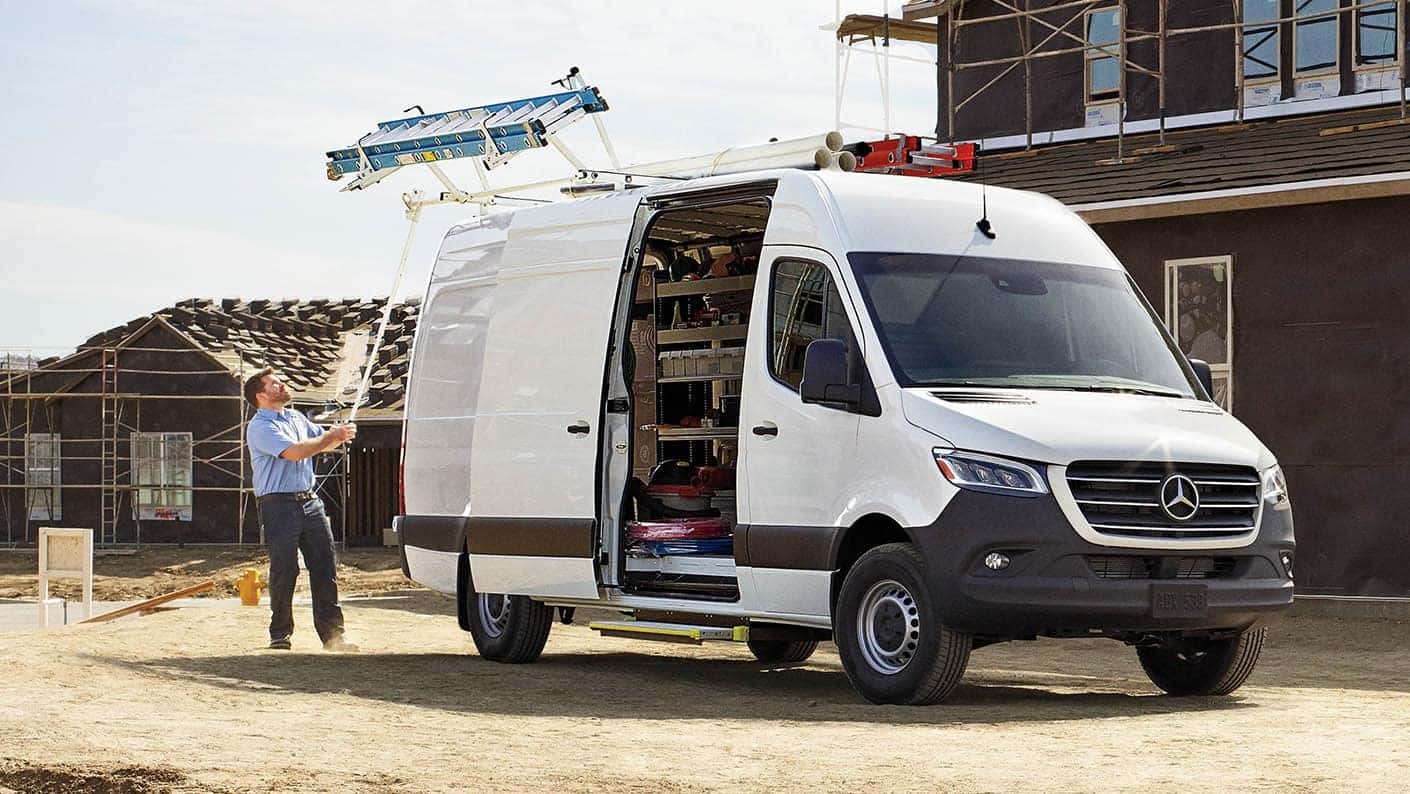
The Mercedes-Benz Sprinter is offered in configurations ranging from shorter vans suited to frequent local stops to extended high-roof models with substantially more room for cargo and commercial upfits. Wheelbase, body length, roof height, drivetrain, and van type all affect the final exterior and interior measurements.
For businesses around Hoffman Estates and the northwest Chicago suburbs, those differences can shape how easily a Sprinter fits into parking areas, service entrances, loading zones, job sites, and commercial garages. Inside, cargo-floor length, standing height, door openings, and width between the wheelhouses can be just as important as total cubic volume.
The 2026 Sprinter Cargo Van offers four primary wheelbase and roof combinations: a 144-inch wheelbase with a standard roof, a 144-inch wheelbase with a high roof, a 170-inch wheelbase with a high roof, and a 170-inch extended configuration with a high roof. The 144-inch standard-roof Cargo Van measures approximately 234 inches long, 100 inches high, and 92 inches wide with the mirrors.
That shorter Cargo Van provides 319 cubic feet of cargo volume, 133 inches of cargo-bed length, 68 inches of standing height, and 53 inches of width between the wheelhouses. Businesses that need substantially more working or storage room can move into the longer high-roof configurations.
The shorter Sprinter footprint is well suited to businesses that make frequent stops or regularly work in tighter parking and loading areas.
The longer chassis provides additional floor space for shelving, tools, deliveries, equipment, or passenger seating.
The extended Cargo Van adds body length behind the rear axle to maximize enclosed storage without increasing the 170-inch wheelbase.
The width at the wheelhouses is an important measurement when planning pallets, cabinets, bins, or rolling equipment.
A wide sliding-door opening gives crews another practical loading point for tools, cases, supplies, and commercial equipment.
The rear opening accommodates larger cargo that would be difficult to load through a conventional passenger-vehicle opening.
Passenger Van dimensions change according to wheelbase and roof. A 144-inch-wheelbase model measures approximately 234 inches long, while the 170-inch-wheelbase Passenger Van measures about 274 inches. High-roof 170-inch models provide approximately 75.5 inches of standing height and seating for up to 15 people.
The 2025 Sprinter Cargo Van gives commercial buyers several distinctly different footprints. Shorter 144-inch-wheelbase models measure approximately 234 inches long, while 170-inch models reach about 274 inches. The extended 170-inch Cargo Van stretches to approximately 290 inches overall for businesses that prioritize maximum rear storage.
High-roof configurations add valuable vertical space for contractors, mobile service operations, delivery companies, and other businesses whose employees regularly move through the rear compartment. At the upper end of the range, Sprinter Cargo Vans provide approximately 533 cubic feet of cargo volume, up to 189 inches of cargo-floor length, and as much as 79 inches of interior standing height.
The 144-inch-wheelbase Cargo Van keeps the overall body under 20 feet long while retaining a large enclosed load area.
The 170-inch-wheelbase body provides more room for long shelving systems, larger tools, equipment, and delivery loads.
The extended 170-inch configuration provides the longest enclosed Cargo Van body in the lineup.
The largest configurations provide more than 500 cubic feet of enclosed storage for high-volume commercial use.
Nearly 16 feet of maximum floor length creates room for long materials, built-in storage, or multiple equipment stations.
High-roof Cargo Vans provide enough vertical clearance for many adults to stand comfortably in the rear compartment.
The 2024 Sprinter Cargo Van is available in three principal body lengths. A 144-inch-wheelbase model measures about 234 inches long, a 170-inch-wheelbase model measures approximately 274 inches, and the extended 170-inch configuration reaches about 290 inches. Standard-roof and high-roof bodies give businesses additional control over exterior clearance and interior working height.
The largest 2024 Cargo Van configurations provide up to 533 cubic feet of cargo volume and approximately 189 inches of cargo-floor length. Maximum interior standing height reaches about 79 inches, while cargo-floor width can reach approximately 74 inches depending on configuration.
The 144-inch-wheelbase Sprinter is the shortest Cargo Van configuration and requires less space when maneuvering or parking.
The 170-inch-wheelbase Sprinter adds considerable rear space without moving to the longest available body.
The longest Cargo Van prioritizes interior capacity for operations that routinely fill a standard-length commercial van.
Maximum cargo volume makes the extended high-roof Sprinter well suited to large delivery loads and extensive upfits.
Long floor space accommodates shelving systems, building materials, equipment cases, and other oversized loads.
High-roof models provide enough height for many users to move around the cargo compartment without crouching.
The 2023 Sprinter Cargo Van spans from a 233.5-inch-long 144-inch-wheelbase configuration to a 274.3-inch 170-inch-wheelbase model. Businesses needing the most enclosed floor space can move to the extended 170-inch version, which reaches approximately 290 inches in overall length.
Maximum cargo volume reaches approximately 532.6 cubic feet, with up to 189.4 inches of cargo-floor length and 79.1 inches of interior standing height. The Sprinter’s roughly 70-inch maximum floor width also leaves useful room for side-mounted shelving while preserving an aisle through the cargo area.
The 144-inch-wheelbase configuration combines commercial-van capacity with a footprint better suited to frequent urban and suburban stops.
The 170-inch wheelbase adds more than 40 inches of overall vehicle length compared with the shorter configuration.
Additional rear overhang gives the extended version the longest cargo floor of the three primary body lengths.
The largest configuration provides more than 530 cubic feet for cargo, commercial equipment, or a specialized upfit.
The extended load area provides nearly 16 feet of maximum floor length.
High-roof models provide more than 6.5 feet of maximum vertical clearance inside the cargo compartment.
The 2022 Sprinter Cargo Van provides 144-inch and 170-inch wheelbases, with an extended body also available on the 170-inch platform. Overall length measures approximately 233.5 inches for shorter configurations, 274.3 inches for the regular 170-inch model, and 290 inches for the extended version.
Body width measures approximately 79.5 inches without the mirrors and 95.5 inches with them. Overall height depends on roof, drivetrain, weight class, and body configuration, making the individual van’s height particularly important for businesses that use covered parking, service bays, loading docks, or other areas with limited overhead clearance.
The shortest Sprinter Cargo Van measures approximately 233.5 inches overall and provides a more compact commercial-van footprint.
The longer chassis increases overall length to approximately 274.3 inches and creates substantially more usable floor area.
The extended body reaches approximately 290 inches long while retaining the 170-inch distance between the axles.
The body itself measures approximately 79.5 inches wide when the exterior mirrors are excluded.
Total width with the mirrors becomes particularly relevant when entering narrow loading areas, gates, and service spaces.
Overall vehicle height changes significantly with roof design and drivetrain, so clearance needs should be matched to the individual configuration.
The core Sprinter body choices have remained remarkably consistent across these model years. Cargo Van buyers can choose a shorter 144-inch wheelbase, move up to a 170-inch wheelbase for more load-floor space, or choose an extended body on the 170-inch platform when cargo capacity takes priority over overall vehicle length.
Roof, drivetrain, weight class, and body type create additional dimensional differences within each model year. Cargo Van, Crew Van, and Passenger Van configurations can therefore have different heights, interior lengths, capacities, and seating arrangements even when they share the same wheelbase.
| Model Year | Wheelbase Choices | Major Cargo Van Lengths | Maximum Cargo Volume | Maximum Cargo-Floor Length |
|---|---|---|---|---|
| 2026 | 144 in. and 170 in. | Short, long, and 170-in. extended bodies | Varies by configuration | Varies by configuration |
| 2025 | 144 in. and 170 in. | Approx. 234, 274, and 290 in. | Up to approx. 533 cu. ft. | Up to approx. 189 in. |
| 2024 | 144 in. and 170 in. | Approx. 234, 274, and 290 in. | Up to approx. 533 cu. ft. | Up to approx. 189 in. |
| 2023 | 144 in. and 170 in. | 233.5, 274.3, and 290 in. | Up to approx. 532.6 cu. ft. | Up to approx. 189.4 in. |
| 2022 | 144 in. and 170 in. | 233.5, 274.3, and 290 in. | Varies by configuration | Varies by configuration |
A 144-inch-wheelbase Sprinter is roughly 234 inches long and requires less room for parking and maneuvering. That can benefit HVAC companies, electricians, plumbers, delivery services, and other businesses making frequent stops throughout Hoffman Estates, Schaumburg, and neighboring communities.
A 170-inch wheelbase increases overall length to roughly 274 inches in a regular long-body Cargo Van. The additional floor space supports larger shelving layouts, longer equipment, bulkier loads, and operations that routinely run out of room in a shorter van.
The extended Sprinter uses a 170-inch wheelbase but adds additional body length behind the rear axle. A regular 170-inch Cargo Van is approximately 274 inches long, while the extended body reaches about 290 inches.
Those additional inches can provide valuable room for long shelving runs, delivery inventory, construction equipment, mobile workshops, or other commercial loads. The tradeoff is greater rear overhang and a longer overall footprint to account for when parking or maneuvering around a job site.
Standard-roof Sprinter models keep the exterior profile lower and may be a better match for businesses that regularly enter garages or covered loading areas. High-roof configurations prioritize interior vertical clearance and can allow employees to stand and move around more comfortably in the rear compartment.
A high roof can be especially useful for mobile repair businesses, contractors, delivery operations, and upfits that use tall shelves or cabinets. Exterior height can also change with drivetrain and weight class, so businesses with strict clearance limits should consider the full configuration rather than roof type alone.
Total cargo volume provides a useful overview of interior capacity, but commercial upfits often depend on several more specific measurements. Floor length determines how much equipment can be installed from front to rear, while wheelhouse width affects what can sit directly on the cargo floor.
Longer floor space provides more room for tool storage, workbenches, delivery racks, building materials, and other equipment that needs uninterrupted length.
Approximately 53 inches between the wheelhouses on current Cargo Van configurations is an important consideration for pallets, cases, cabinets, and rolling equipment.
The wider portion of the cargo floor provides additional room for side-mounted storage while preserving space through the center of the van.
High-roof configurations can provide enough vertical clearance for many adults to stand, making the van more practical as a mobile workspace.
A wide side entrance can simplify curbside loading and access to tools or supplies without requiring crews to open the rear doors.
A large rear opening is useful for bulky equipment, carts, freight, and commercial items that require more clearance during loading.
The Sprinter Cargo Van dedicates most of its enclosed body to storage and upfit space. Crew Van models add rear seating while retaining room behind the passenger area for tools, equipment, or other cargo. Passenger Vans use more of the body for seating and passenger access, with 2026 models offering room for up to 12 passengers on the 144-inch wheelbase or up to 15 on the 170-inch wheelbase.
Businesses transporting people and equipment may prefer the balance offered by a Crew Van, while delivery and service operations can make fuller use of a Cargo Van’s rear compartment. Passenger Van dimensions are better suited to shuttle, group transportation, hospitality, and other applications where seating capacity is the primary concern.
A shorter Sprinter can be easier to manage during repeated service stops, in crowded commercial lots, and at residential properties where driveway space is limited. The 144-inch wheelbase also reduces the amount of vehicle extending behind the rear axle compared with an extended Cargo Van.
Companies that travel between industrial parks, job sites, warehouses, and customers throughout the northwest suburbs may place greater value on the additional storage of a 170-inch or extended model. High-roof vans can further improve the workspace for employees who spend part of the day organizing equipment or working from inside the vehicle.
Mercedes-Benz of Hoffman Estates offers Sprinter configurations for contractors, delivery operations, passenger transportation, mobile service businesses, and other commercial needs throughout the Chicago area.