
Mercedes-Benz Wiper and Washer System Care for Chicago Winters
A clear windshield in January depends on two things working together: healthy blades and a washer system that actually sprays. Good Mercedes-Benz wiper and washer system care for Chicago winters means checking both before the first lake-effect snow arrives. We see the same problems each season at Mercedes-Benz of Hoffman Estates, and most are easy to head off. If something already looks off, you can schedule service with our team.

Why Chicago Winters Are Hard on Mercedes-Benz Wipers and Washer Systems
Winter here is rough on anything that helps you see. Snow and road salt work against the blades and the washer at the same time, so check both systems before cold weather settles in.
What Snow, Ice, Slush, and Road Salt Do to Your Visibility Equipment
Snow and ice keep blades from touching the glass evenly. Slush and road salt coat the windshield again and again, so you use more washer fluid than you expect. Freezing temperatures also stiffen worn rubber and can freeze unsuitable fluid in the reservoir, lines, or nozzles.
Signs Your Wiper or Washer System Needs Service
Book a visit if blades streak, skip, or leave uncleared areas. The same goes for washer spray that turns weak or stops. Those symptoms are easier to fix in October than during a single-digit morning commute.
Choosing and Refilling Winter Washer Fluid
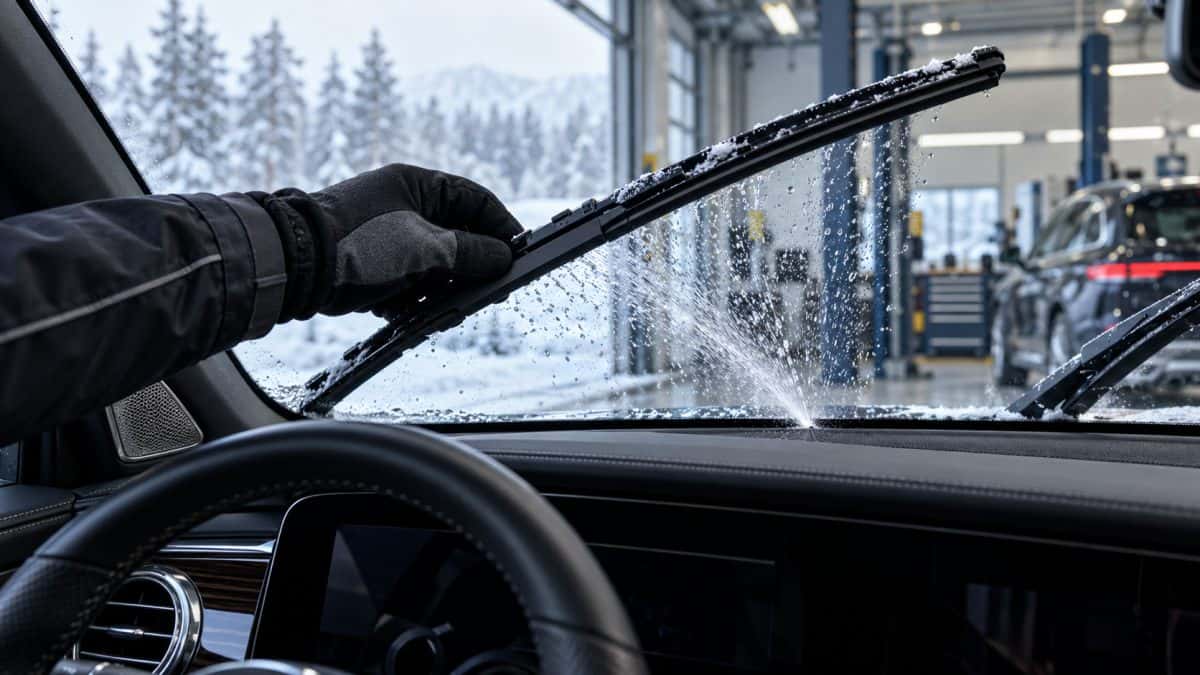
Switch to winter-grade washer fluid before the cold arrives. It’s one of the simplest ways to prepare a Mercedes-Benz for Chicagoland weather, and our service team offers fluid checks and winter-grade washer fluid installation.
Freeze Protection Ratings for Chicagoland Temperatures
Chicago lows regularly run below zero, and a polar vortex year can push into the negative twenties. The fluid rated to 20°F on the shelf next to the register is a summer product with winter packaging. Look for a rating of at least -20°F, and -25°F or lower if you park outside or drive early mornings. The rating is printed on the container, usually near the bottom of the front label.
One caution: the rating describes freeze protection in the reservoir, not spray performance on glass. Fluid rated to -20°F will still leave a film in single-digit temperatures if the windshield is colder than the fluid. That’s normal, and it’s why the defroster matters as much as the fluid.
Fluids to Avoid and How to Flush Out Summer Fluid
Topping off a reservoir that still holds a lot of summer fluid dilutes its freeze protection. You can use up the old fluid first, or we can flush it before you refill. Never put plain water in the reservoir in freezing weather. And since washer fluid and engine coolant belong to different systems, don’t mix winter-rated washer fluid with antifreeze coolant. Skip homemade mixtures like vinegar or dish soap too.
Filling steps vary by model, so check your manual. On the GLC SUV, you open the washer-fluid cap by pulling its front protrusion, then add fluid. On the Mercedes-Maybach EQS SUV, you unlock the vehicle, press the rear of the washer-fluid filler flap, add fluid, and close the flap.
Switch off the vehicle before opening the hood, because engine-compartment components may run or start unexpectedly. Washer concentrate is highly flammable and could ignite on hot engine components or the exhaust. Avoid spilling it beside the filler opening, and keep fire, open flames, smoking, and sparks away.
Washer Nozzles and MAGIC VISION CONTROL in Freezing Weather
If spray stops during a freeze, suspect frozen fluid or ice at the nozzles first. Don’t force anything or apply excessive heat.
Clearing Frozen or Clogged Nozzles and Washer Lines
Let the vehicle warm up and thaw naturally, then test the spray. If a nozzle still looks blocked, have a technician clear it rather than poking at it. Forcing parts turns a cleaning job into a repair.
If your Mercedes has MAGIC VISION CONTROL, you have a real advantage here. Instead of nozzles on the hood spraying fluid across the glass, the washer fluid travels through channels built into the wiper blade itself and emerges through laser-cut pores right at the blade’s edge, on both the up and down stroke. That means no blinding wash of fluid across your windshield at 60 mph, and no spray freezing on cold glass before the blade reaches it.
The winter part matters more. On equipped models, the reservoir, the supply lines, and the blades themselves are all heated, with heating elements running through the spring rails. Ice doesn’t build along the blade edge the way it does on a conventional wiper, and the system runs a separate winter wash program. It still needs properly rated winter fluid in the reservoir, but it gives that fluid a considerably better chance of doing its job.
When Weak Spray Points to a Pump or Heater Problem
If spray stays weak after the car has thawed and the reservoir holds suitable fluid, the problem is upstream of the nozzle: a partially blocked line, a failing pump, or on equipped models a heating element that’s stopped working. Each produces similar symptoms, so it takes a diagnostic to separate them. Our service center can run that, and you can contact us with questions first.
| Symptom | Often points to |
|---|---|
| Streaking | Worn or dirty blade edge |
| Chatter | Stiff rubber or poor glass contact |
| Weak spray | Clogged nozzle, line, or freeze issue |
| No spray, pump running | Frozen fluid or blockage |
When to Replace Wiper Blades and Which Type to Choose for Snow
Let the blades’ condition tell you when to replace them, rather than the calendar. Persistent streaking or chatter, along with cracks or missed areas, means replacement may be due. Good wiper blades for snow also need to fit your specific vehicle.
Winter, Beam, and Conventional Blades Compared
Choosing windshield wipers for snow comes down to how well a design resists buildup and stays in contact with the glass. This general comparison is qualitative.
| Blade type | How it handles snow and ice | Trade-off | Best for |
|---|---|---|---|
| Winter | A rubber boot encloses the frame, so ice can’t pack into the joints and lift the blade off the glass | Heavier and less aerodynamic, so it can lift at highway speed | Heavy snow commutes, vehicles parked outside |
| Beam | One-piece design with no exposed joints; a built-in spoiler keeps pressure even across the glass | Costs more than conventional | All-season daily driving in mixed conditions |
| Conventional | Metal frame with multiple pivot points that collect ice and snow | Ice buildup lifts sections of the blade off the glass, leaving streaks | Milder conditions or a garaged vehicle |
Sedans, SUVs, and Sprinter vans differ in blade length and rear wipers. Confirm size, attachment, and compatibility before you think about style. We can confirm fit for you.
How to Remove Ice and Keep Wipers From Freezing Without Damage
Clear snow and thaw ice before you touch the wiper switch. Freeing blades gently protects the rubber edge and the wiper mechanism.
Prevention Habits and Safe Thawing Methods
Clear snow off the glass and the blades before you leave, and let the defroster soften heavy ice rather than attacking it with a scraper. Lifting the wipers off the glass overnight works on many vehicles, but check your manual first: some Mercedes models park the wipers beneath the hood lip, and pulling them up from that position can bend the arm. A windshield cover is the safer option if you’re unsure.
Mistakes That Damage Blades and Wiper Motors
Using windshield wipers on ice is a bad idea. Running frozen wipers can tear rubber and strain the motor. Never pull blades forcefully off the glass, and never pour hot or boiling water on a cold windshield. Keep metal scrapers away from the wipers.
Winter Driving Tips for Clear Visibility
Run the defroster early and keep it running. It cuts interior fogging and keeps the glass warm enough that ice doesn’t re-form along the blade edge mid-drive, which is what causes wipers to freeze up while you’re moving.
Wiper Settings, Rain Sensor, and Defroster Use in Heavy Snow
Pick a wiper setting that clears the glass without dragging the blades across dry surface, since dry wiping is what tears rubber edges. If your vehicle has a rain sensor, be ready to override it: the sensor reads moisture, not ice, so it can leave the wipers running slowly while the glass is still packed. Switch to manual and set the speed yourself when conditions are changing fast.
Managing Salt Film and Smearing in Slush
In Chicagoland slush, salt leaves a hazy film that smears and glares, especially at night. Enough winter washer fluid, clean glass, and sound blades usually bring the view back. If smearing persists, the blades are the first suspect.
Your Pre-Winter Visibility Checklist
Everything above comes down to five things worth doing before the first real snow:
-
Check blades for streaks, chatter, and cracked rubber
-
Fill with washer fluid rated to at least -20°F
-
Test the spray at each nozzle, front and rear
-
Clear snow and ice off the glass before using the wipers
-
Confirm blade size and attachment type for your model
Work through those and you’ll catch most of what goes wrong in January. If anything on the list turns up a problem, or if you’d rather have someone else look, that’s what the service bay is for.
Schedule Wiper and Washer Service at Mercedes-Benz of Hoffman Estates
Make wiper and washer checks part of your pre-winter routine. During a visit, we assess blade condition, washer-fluid suitability, and spray performance, plus any symptoms that need further diagnosis. Our technicians are certified by the National Institute for Automotive Service Excellence, we use genuine OEM parts, and we offer flexible scheduling, including mobile and door-to-door service.
Call 847-304-3104 or schedule service online. You’ll find us at 1000 W Golf Rd, Hoffman Estates, IL 60169.
Frequently Asked Questions
How often should I replace wiper blades? Go by condition. Streaking, chatter, cracks, or missed areas mean it may be time.
Can I use plain water in an emergency? No. It can freeze in the reservoir, lines, or nozzles.
What if my washer spray freezes? Let the vehicle thaw, then retest. If it stays weak, have it checked.
Can heated washer features replace winter fluid? No. On equipped models they help, but you still need properly rated winter fluid.
Should I lift my wipers in winter? On most vehicles yes, and it keeps the blades from freezing to the glass. Check your manual first, though: some Mercedes models park the wipers under the hood lip, where lifting them can bend the arm. A windshield cover works either way.
Why do my wipers chatter? Usually worn rubber that’s lost its flexible edge, or a bent arm holding the blade at the wrong angle to the glass. New blades fix the first; the second needs adjustment.
0 comment(s) so far on Mercedes-Benz Wiper and Washer System Care for Chicago Winters