
Mercedes-Benz DISTRONIC® vs Standard Cruise Control
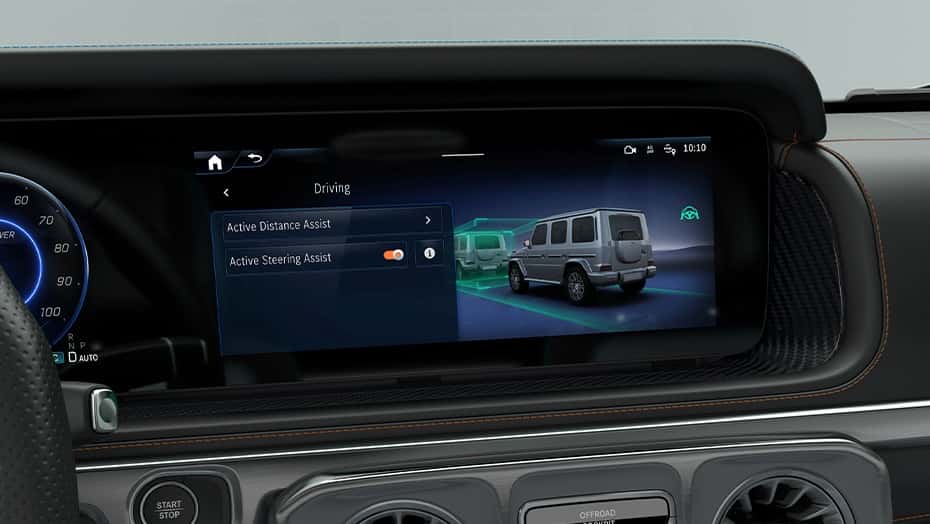
- Standard cruise control maintains a selected speed but does not automatically respond to changing traffic.
- Active Distance Assist DISTRONIC® can adjust speed, maintain a selected following distance, and bring the vehicle to a stop when necessary.
- DISTRONIC® reduces repeated acceleration and braking in traffic, but the driver must remain attentive and ready to take control.
Cruise control is easy to appreciate when traffic is moving steadily. Set a speed, rest your foot, and let the vehicle maintain a consistent pace. The limitations become obvious as soon as traffic slows near an interchange, a vehicle merges into your lane, or I-90 begins its familiar transition into stop-and-go congestion.
Mercedes-Benz Active Distance Assist DISTRONIC® is designed for those changing conditions. Instead of maintaining speed without considering surrounding traffic, it monitors the vehicle ahead and adjusts acceleration or braking to preserve a selected following distance. For drivers traveling between Hoffman Estates, Schaumburg, O’Hare, and Chicago, that difference can substantially reduce the amount of speed management required during a commute.
What Standard Cruise Control Does
Standard cruise control maintains the speed selected by the driver. If you set it to 65 mph on an open stretch of highway, the vehicle continues traveling at approximately that speed until you brake, cancel the system, or select a different setting. It is most useful on roads where traffic is light and speeds remain consistent for long periods.
The system does not typically evaluate the speed of a vehicle ahead. If traffic slows, the driver must brake and may need to reset or resume cruise control once traffic begins moving normally again. This makes standard cruise control useful for open highway travel but less helpful on busy Chicagoland expressways where traffic flow changes frequently.
How Active Distance Assist DISTRONIC® Works
Active Distance Assist DISTRONIC® combines the basic speed-setting function of cruise control with radar and other vehicle sensors. The driver selects a desired speed and following distance. When the road ahead is clear, the vehicle travels at the selected speed. When it approaches slower traffic, the system reduces speed to help maintain the chosen gap.
If the vehicle ahead accelerates or changes lanes, DISTRONIC® can bring the Mercedes-Benz back toward the original set speed. In compatible models and operating conditions, the system can brake the vehicle to a complete stop and resume as traffic moves again. This is the feature that makes DISTRONIC® especially relevant to congestion around the Jane Addams Memorial Tollway, Route 53, and major shopping areas near Schaumburg.
DISTRONIC® vs Standard Cruise Control
| Function | Standard Cruise Control | Active Distance Assist DISTRONIC® |
|---|---|---|
| Maintains a set speed | Yes | Yes |
| Responds to slower traffic | No | Yes |
| Maintains a selected following distance | No | Yes |
| Can brake to a stop | No | Yes, on equipped models and under appropriate conditions |
| Controls steering by itself | No | No. Steering support requires separate equipped features. |
| Best driving environment | Open highways with steady traffic | Highways, changing traffic, and stop-and-go commuting |
Why DISTRONIC® Makes a Difference in Chicagoland Traffic
A northwest Chicago commute rarely stays consistent from beginning to end. Traffic may move freely through Hoffman Estates, compress near Schaumburg, and slow again approaching O’Hare or downtown Chicago. With standard cruise control, each change requires the driver to cancel the system, brake, accelerate, and reset the desired speed.
DISTRONIC® manages much of that repeated speed adjustment. The system can slow smoothly behind another vehicle, preserve the selected distance, and accelerate again when the lane opens. The driver remains responsible for monitoring traffic, but fewer routine pedal inputs can make an extended commute feel less demanding. It is one of several Mercedes-Benz features suited to Chicago traffic and I-90 commutes.
Steady Highway Driving
When I-90 is moving freely, both systems can maintain a set speed. DISTRONIC® adds an extra layer of convenience by responding when another driver merges into the lane or when traffic begins slowing farther ahead. Once the obstruction clears, the system can return toward the selected speed without requiring the driver to reset it.
Stop-and-Go Congestion
The contrast becomes clearer in heavier traffic. Standard cruise control provides little value once speeds begin rising and falling every few seconds. DISTRONIC® can continue managing distance and speed at lower traffic speeds, including stopping and resuming when the model and operating conditions permit. The exact restart behavior can vary by vehicle, model year, and assistance package.
Longer Trips Outside Chicago
DISTRONIC® is also helpful beyond the daily commute. On longer drives through Illinois, Wisconsin, or Indiana, it can respond when traffic density changes or a slower vehicle enters the lane. Standard cruise control remains effective on quiet roads, but DISTRONIC® requires fewer manual adjustments as surrounding speeds fluctuate.
DISTRONIC® Is Not the Same as Active Steering Assist
Active Distance Assist DISTRONIC® primarily manages longitudinal movement, meaning acceleration, speed, braking, and following distance. It does not automatically mean the vehicle can steer, center itself in a lane, or change lanes. Those functions require separate technologies that may be included in a Mercedes-Benz Driver Assistance Package.
Active Steering Assist can provide steering support to help keep an equipped vehicle centered by monitoring lane markings and surrounding traffic. Depending on the model and package, additional technologies may include Active Lane Change Assist, Active Speed Limit Assist, and route-based speed adaptation. These systems can work with DISTRONIC®, but their availability and operation should be verified for the individual vehicle.
This is also different from Mercedes-Benz DRIVE PILOT. DISTRONIC® remains a driver-assistance feature that requires continuous driver supervision. DRIVE PILOT is a separate conditionally automated system designed for operation under a tightly defined set of conditions. Our guide to Mercedes-Benz DRIVE PILOT explains that distinction in more detail.
How Following Distance Settings Affect the System
DISTRONIC® allows the driver to select a preferred time-based following distance. A longer setting creates more room between vehicles, while a shorter setting follows traffic more closely. The distance is not fixed in feet because the system adjusts the physical gap as speed changes.
A longer following setting may feel more comfortable during rain, snow, or high-speed highway travel. A shorter setting can reduce the amount of space left open in dense traffic, although the driver should always choose a setting appropriate for visibility, road conditions, and personal comfort. The system does not replace the need to maintain a safe distance or respond when conditions require more caution.
When the Driver Still Needs to Take Control
DISTRONIC® is designed to assist, not replace, the driver. Cameras and radar can be affected by heavy precipitation, accumulated snow, road spray, dirty sensors, unusual lane positioning, construction zones, or vehicles entering the lane abruptly. The system may also issue a visual or audible warning if greater braking or evasive action is necessary.
Drivers should keep their attention on surrounding traffic and remain prepared to brake, steer, or cancel the system. The steering wheel controls and instrument display show whether DISTRONIC® is active, the selected speed, and the detected vehicle ahead. Always consult the owner’s manual for instructions and limitations specific to the model.
Which Mercedes-Benz Models Offer DISTRONIC®?
Active Distance Assist DISTRONIC® is available across many Mercedes-Benz sedans, SUVs, coupes, and electric vehicles, but it is not configured identically across the lineup. It may be standard on one trim, optional on another, or included as part of a broader Driver Assistance Package. Availability can also change between model years.
Drivers comparing compact luxury SUVs can review current Mercedes-Benz GLC models, while buyers who want a larger cabin can look at the Mercedes-Benz GLE lineup. Because two visually similar vehicles may have different assistance equipment, it is important to confirm features using the window sticker, vehicle build information, and a demonstration during the test drive.
How to Tell Whether a Vehicle Has DISTRONIC®
The most reliable method is to review the original window sticker or vehicle equipment list. A steering wheel may have controls that appear similar across vehicles even when the underlying assistance packages differ. The instrument display can also show distance-setting graphics when DISTRONIC® is installed and active.
This matters when comparing pre-owned vehicles. Technology names and package structures have changed over time, and older models may refer to DISTRONIC PLUS® rather than Active Distance Assist DISTRONIC®. Ask the sales team to verify the exact equipment by VIN instead of assuming the system is included based on trim level alone.
Is DISTRONIC® Worth Choosing?
Standard cruise control remains useful for drivers who spend most of their highway time on open roads with predictable traffic. It is simple, effective, and sufficient when maintaining one speed is the main goal. Drivers who rarely encounter congestion may not use the additional capabilities of adaptive cruise control as frequently.
DISTRONIC® provides a more meaningful advantage for regular I-90 commuters, drivers who take frequent road trips, and anyone who routinely encounters changing traffic speeds. Its ability to manage following distance and repeated acceleration or braking can make busy routes feel calmer. It does not remove the driver from the process, but it handles one of the most repetitive parts of highway travel with greater precision than standard cruise control.
Compare Mercedes-Benz Driver Assistance Technology in Hoffman Estates
The difference between standard cruise control and DISTRONIC® is easiest to understand from the driver’s seat. At Mercedes-Benz of Hoffman Estates, our team can demonstrate the controls, explain which assistance features are included on a specific vehicle, and help you compare configurations based on how you travel through Hoffman Estates and the northwest Chicago suburbs.
Browse our new Mercedes-Benz cars and SUVs, or contact our team to ask about models equipped with Active Distance Assist DISTRONIC®. We are located at 1000 W Golf Road in Hoffman Estates, with convenient access from Schaumburg, Barrington, Arlington Heights, and the I-90 corridor.
Frequently Asked Questions About Mercedes-Benz DISTRONIC®
Does DISTRONIC® steer the vehicle?
Active Distance Assist DISTRONIC® manages speed, braking, and following distance, but it does not provide steering assistance by itself. Steering support requires a separately equipped feature such as Active Steering Assist.
Can DISTRONIC® bring a Mercedes-Benz to a complete stop?
Yes. On equipped models and under appropriate operating conditions, Active Distance Assist DISTRONIC® can brake the vehicle to a complete stop and resume as traffic begins moving. Restart timing and operation can vary by model and model year.
Is DISTRONIC® a self-driving system?
No. DISTRONIC® is a driver-assistance system that requires the driver to remain attentive, supervise its operation, and be prepared to brake or steer. It is different from the conditionally automated Mercedes-Benz DRIVE PILOT system.
Is DISTRONIC® standard on every Mercedes-Benz?
No. DISTRONIC® availability varies by model, model year, trim, and equipment package. Check the original window sticker or vehicle equipment list to confirm whether a particular Mercedes-Benz includes the system.
0 comment(s) so far on Mercedes-Benz DISTRONIC® vs Standard Cruise Control