
Best Sprinter Upfits for Trades: HVAC, Plumbing, Electrical, and Delivery Fleets
- A well-planned Sprinter upfit turns a stock van into a rolling workshop built around real trade workflows.
- Shelving, racks, flooring, lighting, onboard power, and secure storage all play different roles depending on the trade.
- Starting with the right Sprinter wheelbase, roof height, and Cargo Van configuration helps avoid costly upfit adjustments later.
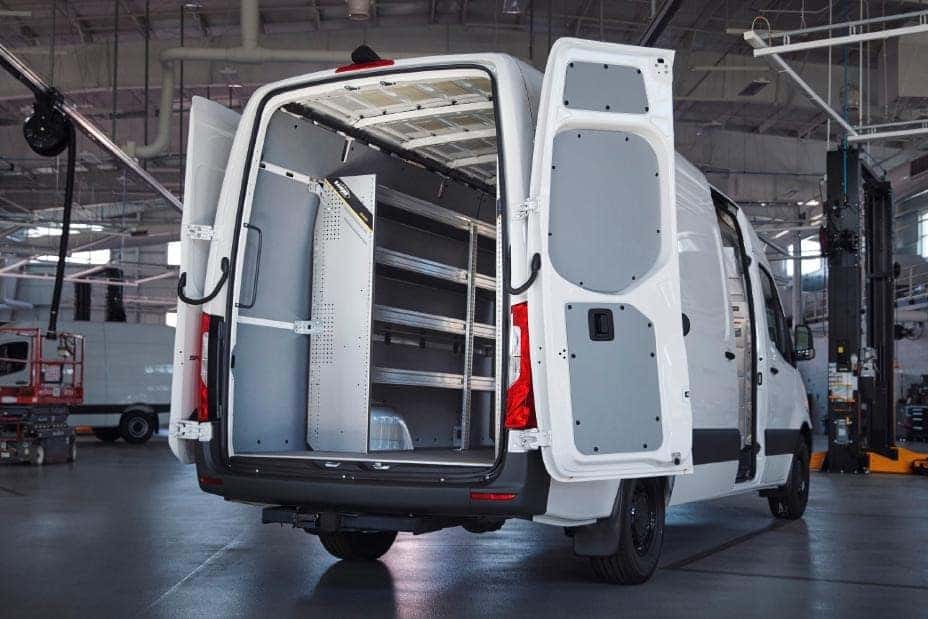
A van that leaves the lot stock is just a box on wheels. The real value of a Mercedes-Benz Sprinter shows up once it’s been configured to match the way a trade actually operates. For HVAC technicians and electricians, plumbers and delivery fleet managers alike, a well-planned Sprinter upfit turns a capable vehicle into a rolling workshop that works as hard as the person driving it. We carry Sprinter vans at Mercedes-Benz of Hoffman Estates and work with buyers every day who are planning exactly this kind of build. Browse our available Sprinters to see what configurations are currently in stock.
Knowing where to start and what to prioritize is the difference between a smart build and an expensive one. This guide covers the upfit categories most relevant to trade and fleet use, with specific detail on how each one connects to real on-the-job workflow.
Why the Mercedes-Benz Sprinter Is the Go-To Platform for Trade Upfits
No van has earned its reputation among tradespeople quite like the Sprinter. Mercedes-Benz engineered it with generous interior dimensions, multiple roof height options, and a wide body format that makes it one of the most adaptable platforms for a custom work van build. The Sprinter is available in four main configurations: Cargo Van, Crew Van, Passenger Van, and Cab Chassis. For most trade applications, the Cargo Van is the starting point, with factory-supported upfit categories covering refrigeration, HVAC and plumbing, general services, electrician, telecoms, and delivery.
Choosing the right wheelbase and roof height is the first structural decision in any upfit plan. The table below covers the main configurations and where each tends to fit best by trade:
| Configuration | Cargo Bed Length | Interior Height | Cargo Volume | Notes |
|---|---|---|---|---|
| 144" Wheelbase, Standard Roof | 133 in | 68 in | 319 cu ft | Light service work; tight for tall shelving and no standing room |
| 144" Wheelbase, High Roof | 133 in | 79 in | 374 cu ft | Full standing height; shorter load floor than 170" |
| 170" Wheelbase, High Roof | 174 in | 79 in | 488 cu ft | Full trade builds, pipe/conduit transport |
| 170" Extended Wheelbase, High Roof | 189 in | 79 in | 533 cu ft | Maximum cargo volume; harder to park in cities |
The Sprinter’s durability also plays a direct role in upfit ROI. A vehicle that holds up under the weight of tools and materials through constant loading cycles keeps the overall cost of ownership in check. When businesses invest in a Sprinter upfit, they need the underlying vehicle to be a stable, long-lasting foundation, and the Sprinter delivers that.
Shelving, Bins, and Organized Storage That Match How Trades Actually Work
Interior organization is where most upfit decisions start, and for good reason. A disorganized van costs time, and on a job site, time equals money. Modular shelving systems can be reconfigured as a business grows or as job requirements shift. Adjustable shelf heights handle everything from bulky equipment to small boxed components, while bin systems mounted to shelving frames keep loose parts from rolling around or getting mixed together.
HVAC and Plumbing: Pipe, Refrigerant, and Fitting Storage
HVAC and plumbing vans carry an enormous variety of parts. Fittings, valves, and specialty components all need to be accessible quickly without creating chaos in the cargo area. For HVAC technicians specifically, upfit layouts typically include dedicated brackets for refrigerant tanks to keep them upright and secure, shelving sized for blower motors and compressor components, and shallow drawers for gauges and hand tools. Pipe sections and flexible duct need separate consideration, whether that’s vertical floor storage or an exterior rack, so they aren’t competing for space with smaller components inside.
Plumbers benefit from a different layout: deep shelf sections for longer pipe runs, water-resistant shelving to handle moisture from wet lines, reinforced flooring to handle the weight of copper and PVC stock, and multi-drawer modules for fittings sorted by size and type. A well-designed Sprinter upfit for either trade cuts down on mid-job return trips to the van, and that adds up to real time savings across a full workweek.
Electrical Contractors: Wire Spools, Panels, and Small-Part Organization
Wire management is one of the more technically specific upfit challenges. Electrical contractors deal with spooled wire, conduit, breaker panels, junction boxes, and an array of small components that get tangled or lost without a deliberate system. Wire spool racks mounted to the interior wall keep spools organized and ready to pull without knots or tangles. Drawer systems with individual compartments handle the small-parts side, keeping connectors, clips, and breakers sorted by type rather than jumbled together.
Panel storage requires a more custom approach since panel sizes vary. Some electrical contractors use dedicated vertical racks secured to the floor and wall; others prefer deep horizontal shelving with adjustable strapping. Lockable compartments protect meters and testing equipment. With any electrical Sprinter upfit, nothing should shift during transit. Unsecured panels or conduit sections can damage other inventory and create a safety hazard for the driver.
Ladder Racks, Exterior Carriers, and Getting Materials to the Job Site
There are always materials that need to ride on the outside of the vehicle. Sprinter van rack systems for rooftop mounting free up interior space while safely securing ladders, conduit, pipe stock, and other long materials that can’t fit inside. Upfit options include single-side and double-side drop-down formats, which make loading and unloading from roof height safer and faster, particularly useful for solo operators.
Fixed racks suit trades with consistent load types, while adjustable systems work better for operations that handle varied materials from job to job. Side-mounted exterior carriers add another layer of capacity for HVAC units or plumbing supply that needs to stay accessible without going through the main cargo doors. Installation quality matters here. Poorly mounted racks can shift under load, creating dangerous conditions on the highway and potential roof damage.
Flooring, Wall Liners, and Bulkhead Partitions That Protect Your Investment
The interior of a work van takes a beating. Heavy tools, muddy boots, and dropped equipment wear through unprotected surfaces quickly, and years of daily loading cycles accelerate that damage considerably. Investing in quality flooring and wall liners during the upfit process protects the van’s structural interior and helps maintain resale value, which matters especially for fleet operators managing multiple vehicles over time.
Rubber and composite flooring hold up well against chemical spills and moisture and are far easier to clean than bare metal or factory-installed materials. Wall liners, typically made from plywood or high-density plastic panel, protect against dings and scratches while providing a solid mounting surface for shelving and interior hardware.
Bulkhead partitions serve a safety role beyond organization: they prevent unsecured cargo from moving forward into the cab during hard braking, protecting both the driver and the equipment. A properly built Sprinter upfit should include all three of these protective elements as a baseline.
Lighting and Onboard Power Solutions for Field Productivity
Cargo area lighting is one of those upfit details that doesn’t get enough attention until someone tries to find a part in a dark van before sunrise. LED strip and overhead lighting make a meaningful difference to daily workflow, especially for trades that start early, finish late, or work in enclosed job sites.
Onboard power is the other half of the equation. Inverter systems allow technicians to charge cordless tools, run diagnostics equipment, or power devices directly from the vehicle without hunting for a nearby outlet. Some upfits include shore power connections for job sites with external electricity access, while others rely entirely on the van’s power system. For fleet operations covering long daily routes, onboard power keeps crews self-sufficient throughout the workday.
Secure Tool Storage and Cargo Management for Delivery and Fleet Operations
Fleet operators face a different set of challenges than solo tradespeople. With multiple vehicles and drivers, consistency in cargo organization becomes a priority alongside security. Lockable compartments and toolbox systems protect high-value equipment from theft during unattended stops, a real concern for delivery routes in urban and suburban areas.
Cargo management systems for delivery fleets often incorporate tracked floor systems that allow cargo restraint straps or modular bins to be repositioned based on load type. Standardizing the interior layout across all vehicles also makes it easier to train new drivers and maintain operational consistency across a rotation, something that pays off quickly once you’re managing more than a handful of vans.
How to Plan the Right Sprinter Upfit for Your Trade
The planning phase is where most upfit projects either succeed or get overcomplicated. Starting with a clear picture of daily workflow, what gets carried most frequently, and the job site conditions most commonly encountered gives a reliable foundation for every decision that follows.
Before meeting with a third-party upfit specialist, work through these planning priorities:
- Think through your layout in terms of actual daily workflow. Service calls, multi-stop routes, and install jobs each have different load and access patterns, and those differences should drive shelf placement and door configuration.
- Put frequently accessed parts at the front of the cargo area. Secure zones for expensive tools work best toward the rear, with open floor space reserved for bulky materials.
- Account for exterior carrying needs early in the process, since ladder racks and side carriers affect what’s practical on the interior.
- For fleet builds, standardize the interior layout across vehicles. Consistent configurations make stocking easier and simplify both driver training and vehicle rotation.
- Coordinate van configuration and upfit plan together from the start so the vehicle is built around your business needs rather than adjusted after the fact.
Upfitting is performed by third-party specialists. Our role is to make sure you’re starting with the right Sprinter configuration, properly specced for the build you have in mind. Getting the van selection right before the upfitter gets involved saves time and avoids costly adjustments down the road.
Talk to Mercedes-Benz of Hoffman Estates About Your Sprinter Build
Getting the most out of a Sprinter upfit starts with having the right van. We carry one of the most complete Sprinter lineups in the northwest Chicago suburbs, and our team knows the platform well enough to help you match configuration to build before you ever talk to an upfitter.
- We’ll help you identify the right wheelbase, roof height, and Cargo Van configuration for your trade.
- Our service department is staffed by Mercedes-Benz trained technicians with access to genuine OEM parts for ongoing maintenance.
- We offer financing and leasing structures suited to business and fleet use.
View our current Sprinter lineup or reach out to discuss your Sprinter build with our team directly. You can also call us at (847) 885-7000. Whether you’re outfitting a single service van or building out a fleet, Mercedes-Benz of Hoffman Estates is the right starting point.
Frequently Asked Questions
What are the best Sprinter upfits for trade businesses?
Common trade upfits include modular shelving, bins, ladder racks, exterior carriers, reinforced flooring, wall liners, bulkhead partitions, LED cargo lighting, onboard power, and secure tool storage.
Which Sprinter configuration is best for HVAC, plumbing, or electrical work?
For most trade applications, the Sprinter Cargo Van is the starting point because it provides the open cargo space needed for shelving, racks, tools, parts, and specialty equipment.
Why should businesses plan the van and upfit together?
Coordinating the Sprinter configuration and upfit plan from the beginning helps match wheelbase, roof height, cargo volume, and storage needs before the build starts, reducing costly changes later.
0 comment(s) so far on Best Sprinter Upfits for Trades: HVAC, Plumbing, Electrical, and Delivery Fleets