
Search
-
or select -
Business owners may be able to reduce their 2026 taxable income by purchasing eligible Mercedes-Benz vehicles for qualified business use. Section 179 and bonus depreciation can make it more affordable to add a Sprinter Van to your fleet or purchase a qualifying SUV for your business. Mercedes-Benz of Hoffman Estates can help you compare vehicle configurations, confirm Gross Vehicle Weight Rating (GVWR), and find a vehicle that fits your operation.
Additional limits and eligibility rules apply. Always consult a qualified tax professional regarding your specific situation.
Section 179 of the Internal Revenue Code allows eligible businesses to elect to deduct some or all of the cost of qualifying property in the tax year it is placed in service, instead of recovering the cost through depreciation over several years.
For tax years beginning in 2026, the maximum Section 179 deduction is $2,560,000. This limit is reduced dollar for dollar when the total cost of qualifying Section 179 property placed in service during the year exceeds $4,090,000. The deduction is also subject to the business’s taxable-income limitation and other requirements.
A purchased or financed vehicle may qualify when it is eligible property, used more than 50% for qualified business purposes, and placed in service during the applicable tax year. For calendar-year taxpayers seeking a 2026 deduction, the vehicle generally must be ready and available for qualified business use by December 31, 2026.
Eligibility and the potential deduction depend on the vehicle’s configuration, GVWR, qualified business-use percentage, acquisition and placed-in-service dates, and the taxpayer’s individual circumstances. A GVWR above 6,000 pounds does not, by itself, guarantee a full deduction. Always verify the specific vehicle’s GVWR using its manufacturer certification label and review the purchase with your tax professional.
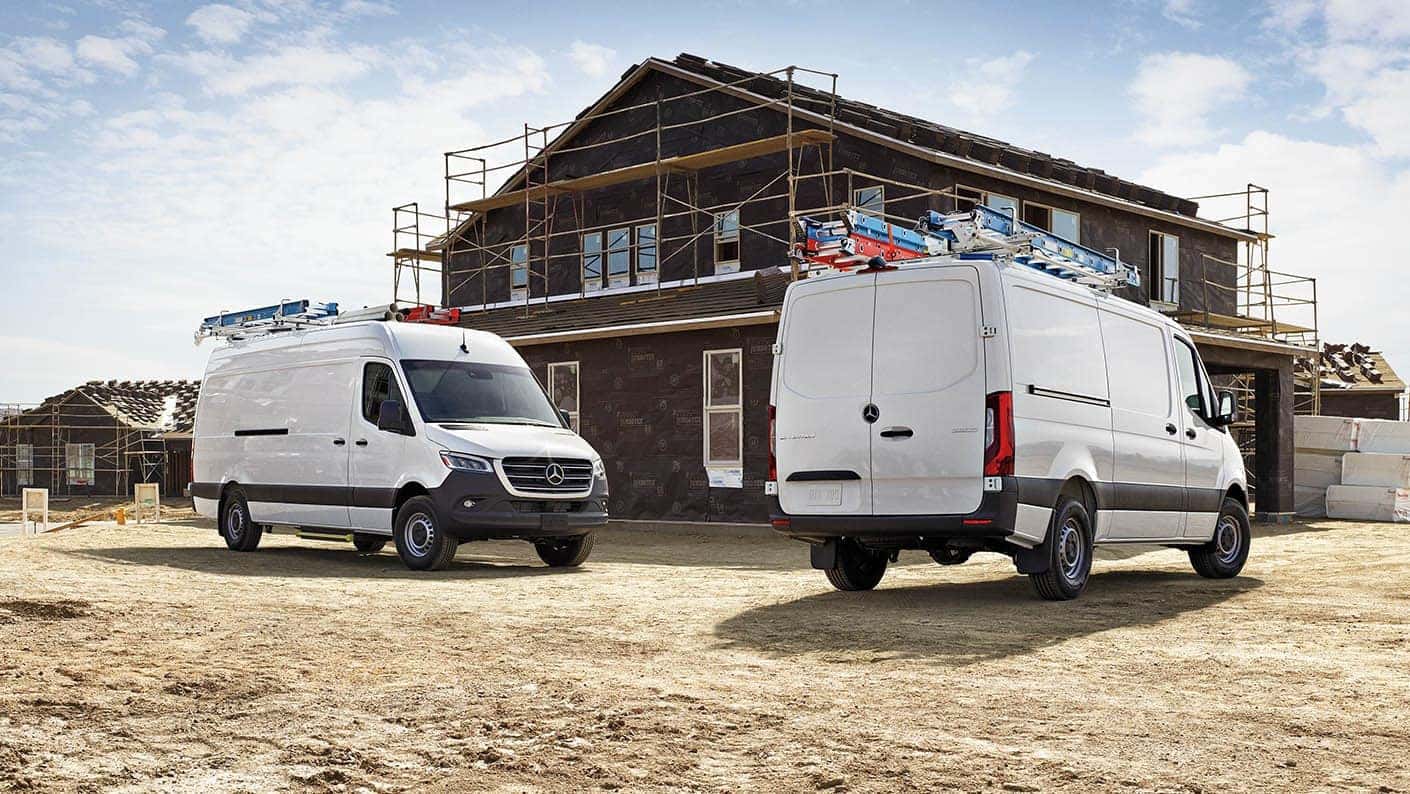
Many Mercedes-Benz Sprinter configurations have a GVWR above 6,000 pounds and may be eligible for Section 179 and bonus depreciation when purchased for qualified business use. The exact treatment depends on the vehicle’s seating, cargo area, body configuration, business use, and other tax requirements.
Business-related shelving, partitions, equipment, and other qualifying upfits may also be eligible for deductions. Keep complete purchase, installation, mileage, and business-use documentation.

Certain Mercedes-Benz SUVs with a GVWR above 6,000 pounds and not more than 14,000 pounds may qualify for Section 179 when used more than 50% for qualified business purposes. For tax years beginning in 2026, the Section 179 deduction for a heavy SUV is generally limited to $32,000. Eligible remaining basis may qualify for bonus depreciation and regular depreciation.
The deduction is based on qualified business use and is subject to the taxpayer’s eligibility, income, elections, and other applicable limitations.
Bonus depreciation, also called the additional first-year depreciation deduction under Section 168(k), may allow a business to deduct eligible remaining basis after applying Section 179. Current federal law generally provides 100% bonus depreciation for eligible property acquired and placed in service after January 19, 2025.
Bonus depreciation has rules that differ from Section 179, and special limitations may apply to passenger automobiles and certain other vehicles. Vehicle eligibility, acquisition date, placed-in-service date, business use, and any elections made by the taxpayer can affect the available deduction.
| Feature | Section 179 | Bonus Depreciation |
|---|---|---|
| 2026 amount | Up to $2,560,000 overall, subject to phaseout, taxable-income, vehicle, and other limits | Generally 100% of eligible remaining basis for qualifying property acquired and placed in service after January 19, 2025 |
| Heavy SUVs | Generally limited to $32,000 for 2026 | May apply to eligible remaining basis after Section 179 |
| Business use | Must exceed 50% for qualified business use | Business-use and listed-property rules may apply |
| Income limitation | Generally limited by taxable income from the active conduct of a trade or business | Not subject to the same Section 179 taxable-income limitation |
Assume a business purchases an eligible $75,000 vehicle and uses it 80% for qualified business purposes. Its starting business-use basis would generally be $60,000 before applying Section 179, bonus depreciation, taxable-income limits, vehicle-specific limits, and other tax rules. The actual deduction may be different, so this illustration should not be treated as a tax estimate.
A vehicle purchased with financing may qualify if the taxpayer owns it, places it in service during the applicable tax year, uses it more than 50% for qualified business purposes, and satisfies the other requirements. The amount financed or paid in cash is not necessarily the same as the allowable deduction.
Certain business-related upfits and equipment, such as shelving, partitions, racks, flooring, or specialized work equipment, may qualify. Treatment depends on the property and when it is placed in service. Retain detailed invoices and consult your tax professional.
Multiple eligible vehicles may be included, but the business remains subject to the overall Section 179 dollar limit, phaseout threshold, taxable-income limitation, business-use rules, and any vehicle-specific limitations.
A conventional vehicle lease generally does not give the lessee a depreciable ownership basis for a Section 179 deduction. Tax treatment can differ for arrangements treated as purchases or financed acquisitions, so ask your tax professional to review the agreement.
An electric vehicle such as an eSprinter may qualify when it is eligible depreciable property used more than 50% for qualified business purposes. Eligibility for Section 179 is separate from eligibility for any federal, state, or local clean-vehicle incentive.
Section 179 is an elective deduction with annual dollar, phaseout, taxable-income, and vehicle-specific limits. Bonus depreciation may apply to eligible remaining basis and is governed by a different set of rules. Businesses may use both when permitted.
If qualified business use falls to 50% or less during the vehicle’s recovery period, part of a previous Section 179 deduction may have to be included in income through depreciation recapture.
No. A deduction generally reduces taxable income; it does not reduce the purchase price or provide a dollar-for-dollar reduction of tax owed.
Mercedes-Benz of Hoffman Estates can help you explore Sprinter Vans and Mercedes-Benz SUVs that may fit your business needs. Our team can provide vehicle specifications and help you locate the manufacturer’s GVWR information, but only your qualified tax professional can determine whether a vehicle and purchase qualify for a particular deduction.
Contact us today to speak with a commercial vehicle specialist, compare available configurations, or explore our current Sprinter and Mercedes-Benz SUV inventory.
Important tax disclaimer: This page provides general information for educational purposes only and is not tax, legal, or accounting advice. Tax laws and individual circumstances vary. Mercedes-Benz of Hoffman Estates does not determine tax eligibility or guarantee any deduction or tax savings. Consult a qualified tax professional before purchasing a vehicle or claiming any deduction.